Popular Poem Categories:
Occasion & Holiday Poems:
These poems celebrate laughter's joy, lifting spirits and brightening even tough days.
Laughter is one of life’s greatest joys. It is free, contagious, and has the power to lift even the heaviest of hearts. These poems about laughter will remind you just how important it is to smile, giggle, and let out a hearty laugh. They say, “Laughter is the best medicine,” and we couldn't agree more! A good laugh can turn a bad day around, lighten the mood, and bring people closer together.
When life feels overwhelming, laughter can be the break you need. As the saying goes, “Laugh and the world laughs with you, cry and you cry alone.” A shared chuckle spreads warmth, while a lighthearted moment can ease stress. And let’s not forget the wise words of e.e. cummings: “The most wasted of all days is one without laughter.”
So, make laughter a daily habit! Whether it’s a silly joke, a fond memory, or just finding humor in the little things, let laughter brighten your day. Not only will you feel better, but those around you will enjoy your company even more. A world filled with laughter is a happier world—let’s make sure we all do our part!

Updated August 28, 2026, by Catherine Pulsifer.
Why don't you laugh, dear boys, when troubles come,
Instead of sitting 'round so sour and glum?
You cannot have all play,
And sunshine every day;
When troubles come, I say, why don't you laugh?
Why don't you laugh, dear girls? 'Twill ever help to soothe
The aches and pains. No road in life is smooth;
There's many an unseen bump,
And many a hidden stump
O'er which you'll have to jump. Why don't you laugh?
Why don't you laugh? Don't let your spirits wait;
Don't sit and cry because the milk you've split;
If you would mend it now,
Pray let me tell you how:
Just milk another cow! Why don't you laugh?
Why don't you laugh, and make us all laugh, too,
And keep us mortals all from getting blue?
A laugh will always win;
If you can't laugh, just grin -
Come on, let's all join in! Why don't you laugh?
The poem is about finding joy and humor in difficult times. It encourages both boys and girls to laugh instead of feeling sad or upset when faced with troubles.
The poet asks why people don't laugh when things go wrong. They suggest that even though life isn't always easy and there are bumps along the way, laughter can help ease the pain. Instead of crying over spilled milk, the poet suggests finding a solution and moving on with a smile. They use the analogy of milking another cow to show that there are often other ways to fix a problem.
Overall, the poem emphasizes the power of laughter to lift spirits and make life more enjoyable for everyone. It encourages people to laugh and spread joy to others, even when things don't go as planned.
"Why don't you laugh, and make us all laugh, too, and keep us mortals all from getting blue?"
"A laugh will always win; if you can't laugh, just grin."
If this poem made you smile, visit our Funny Poems collection for more lighthearted verses to brighten your day.
Laughter sort o' settles breakfast better than digestive pills;
Found it, somehow in my travels, cure for every sort of ills;
When the hired help have riled me with their slipshod, careless ways,
An' I'm bilin' mad an' cussin' an' my temper's all ablaze,
If the calf gets me to laughin' while they're teachin' him to feed
Pretty soon I'm feelin' better, 'cause I've found the cure I need.
Like to start the day with laughter; when I've had a peaceful night,
An' can greet the sun all smilin', that day's goin' to be all right.
But there's nothing goes to suit me, when my system's full of bile;
Even horses quit their pullin' when the driver doesn't smile,
But they'll buckle to the traces when they hear a glad giddap,
Just as though they like to labor for a cheerful kind o' chap.
Laughter keeps me strong an' healthy. You can bet I'm all run down,
Fit for doctor folks an' nurses when I cannot shake my frown.
Found in farmin' laughter's useful, good for sheep an' cows an' goats;
When I've laughed my way through summer, reap the biggest crop of oats.
Laughter's good for any business, leastwise so it seems to me
Never knew a smilin' feller but was busy as could be.
Sometimes sit an' think about it, ponderin' on the ways of life,
Wonderin' why mortals gladly face the toil an care an' strife,
Then I come to this conclusion—take it now for what it's worth
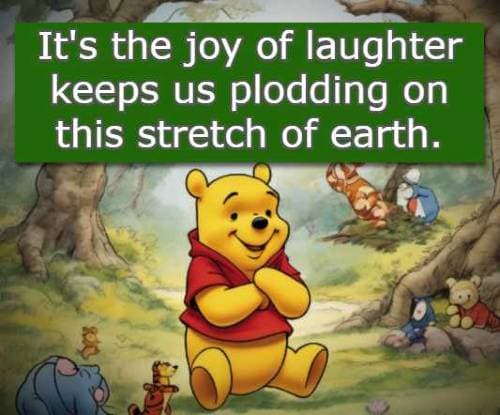
It's the joy of laughter keeps us plodding on this stretch of earth.
Men the fun o' life are seeking—that's the reason for the calf
Spillin' mash upon his keeper—men are hungry for a laugh.
In his poem, Edgar A. Guest celebrates the power of laughter to bring joy and ease troubles in life. It begins by likening laughter to a remedy that settles the stomach better than digestive pills. Guest shares personal experiences of how laughter has helped him overcome frustration and anger, such as when dealing with careless workers or feeling upset about various things. He finds that laughter can quickly improve his mood and make him feel better.
Guest believes that starting the day with laughter sets a positive tone, making everything seem better. He observes that even animals respond positively to laughter, with horses working better for a cheerful driver. He emphasizes how laughter contributes to his overall health and well-being, helping him stay strong and resilient even when feeling run down.
The poet also reflects on the broader significance of laughter in life. He suggests that the pursuit of joy and laughter is what motivates people to keep going despite the challenges and hardships they face. He concludes that laughter is essential for happiness and fulfillment, as indicated by the playful antics of a calf seeking to amuse itself.
Edgar Albert Guest (1881–1959) was a prolific American poet known for his uplifting and inspirational verse. Born in England, Guest moved to the United States with his family as a child.
He began his career as a journalist, eventually becoming a columnist for the Detroit Free Press. Guest's poetry, often written in simple, accessible language, focused on themes of everyday life, family, and human nature. He gained widespread popularity through his syndicated newspaper column, which featured his poems, anecdotes, and reflections. Throughout his career, Guest published numerous books of poetry and became known as the "People's Poet" for his ability to resonate with a broad audience.
His work continues to be cherished for its optimism, warmth, and timeless wisdom.
"Laughter sort o' settles breakfast better than digestive pills" - Edgar A. Guest
"Laughter keeps me strong an' healthy." - Edgar A. Guest
"Like to start the day with laughter; when I've had a peaceful night" - Edgar A. Guest
For more uplifting verses that celebrate happiness, enjoy our collection of Poems About Joy.
When shadows cast their gloom upon my soul,
And burdened heart feels lost within the night,
A fleeting smile can still my thoughts so cold,
Dispelling doubt, igniting purest light.
For in laughter's sweet embrace I find reprieve,
As it unravels knots of sorrow's weave.
Though serious the path may seem to be,
A chuckle reminds us life is more carefree.
The poem "A Chuckle" by Catherine Pulsifer speaks about the power of laughter to bring comfort and lightness to a troubled heart. When the poet feels overwhelmed by shadows of sadness and burdened by the weight of the night, a simple smile can lift her spirits and dispel the darkness. Laughter has the ability to melt away the knots of sorrow, reminding us that life doesn't always have to be serious and heavy.
In times of struggle or when the path ahead seems difficult, a chuckle serves as a gentle reminder that life is meant to be enjoyed and embraced with a sense of lightheartedness. It encourages us to find moments of joy amidst the challenges we face, offering a reprieve from the seriousness of life.
Catherine Pulsifer is a Canadian writer and poet known for her motivational and inspirational works. Pulsifer's writing often focuses on themes of personal growth, positivity, and finding happiness in everyday life. Through her words, she seeks to encourage others to overcome obstacles, cultivate resilience, and live their best lives. Pulsifer's works have touched the hearts of many, inspiring them to pursue their dreams and embrace the beauty of life's journey.
"A fleeting smile can still my thoughts so cold, dispelling doubt, igniting purest light." - Catherine Pulsifer
"For in laughter's sweet embrace I find reprieve, as it unravels knots of sorrow's weave." - Catherine Pulsifer
"Though serious the path may seem to be, a chuckle reminds us life is more carefree." - Catherine Pulsifer

Laughter is part of the journey, and our Poems About Life share more thoughts on facing each day with hope and courage.
A good laugh can take away the blues
It is up to us, we can choose.
You always feel better when you
Have a good laugh, that is so true.
Find a reason to laugh each day
Otherwise, you'll find yourself going gray.
Don't hold it in,
Laugh and grin, grin, grin!
This poem by Catherine Pulsifer highlights the importance of laughter in lifting our spirits and improving our mood. The poet suggests that a good laugh has the power to chase away feelings of sadness and melancholy. It reminds us that we have the ability to choose laughter, and by doing so, we can feel better about ourselves and the world around us.
Pulsifer encourages readers to find reasons to laugh every day, emphasizing that holding onto negativity can lead to a dull and gray existence. Instead, she urges us to embrace laughter, to let it out and express it freely. The repetition of "grin, grin, grin" reinforces the idea that laughter is contagious and beneficial to our well-being.
Overall, the poem serves as a reminder to prioritize joy and humor in our lives, as they have the power to brighten our days and uplift our spirits.
"A good laugh can take away the blues - it is up to us, we can choose." - Catherine Pulsifer
"Find a reason to laugh each day, otherwise, you'll find yourself going gray." - Catherine Pulsifer

For more cheerful thoughts on the gift of laughter, read our page on Laughing.
A laugh is just like sunshine,
It freshens all the day.
It tips the peak of life with light
And drives the clouds away.
The soul grows glad that hears it
And feels its courage strong;
A laugh is just like sunshine
For cheering folks along.
A laugh is just like music,
It lingers in the heart,
And where its melody is heard,
The ills of life depart;
And happy thoughts come crowding
Its joyful notes to greet;
A laugh is just like music
For making living sweet!
In her poem, Ripley Dunlap Saunders compares laughter to sunshine and music, emphasizing its ability to brighten and uplift our lives. Just as sunshine refreshes the day and dispels clouds, laughter brings light and cheer to our souls. The poet suggests that hearing laughter can fill us with courage and happiness, lifting our spirits and helping us to face life's challenges with a positive attitude.
Saunders also likens laughter to music, noting its lingering presence in our hearts and its power to chase away the troubles of life. The joyful sound of laughter brings forth happy thoughts and creates a sweet atmosphere, enhancing our experience of living.
Overall, the poem celebrates the transformative and uplifting effects of laughter, portraying it as a source of joy, courage, and sweetness in our lives.
Ripley Dunlap Saunders (1876–1965) was an American poet and writer known for her lyrical and uplifting verses. Born in Illinois, Saunders began writing poetry at a young age and gained recognition for her talent in capturing the beauty of everyday life. She published several collections of poetry throughout her lifetime, earning praise for her ability to evoke emotion and inspire readers with her words. Saunders' works often explored themes of nature, love, and the human spirit, reflecting her optimistic outlook on life. Her poetry continues to resonate with audiences, offering comfort and inspiration to those who encounter it.
"A laugh is just like sunshine, it freshens all the day." - Ripley Dunlap Saunders
"A laugh is just like music, it lingers in the heart." - Ripley Dunlap Saunders
"A laugh is just like music for making living sweet!" - Ripley Dunlap Saunders

You may also enjoy these inspiring Laugh Quotes that remind us how powerful a simple laugh can be.
Here's a motto just your fit,
Laugh a little bit.
When you think you're trouble hit.
Laugh a little bit.
Look misfortune in the face.
Brave the beldame's rude grimace;
Ten to one 'twill yield its place
If you have the wit and grit
Just to laugh a little bit.
Keep your face with sunshine lit; -
Laugh a little bit.
Gloomy shadows off will flit
If you have the wit and grit
Just to laugh a little bit.
Cherish this as sacred writ,
Laugh a little bit.
Keep it with you, sample it
Laugh a little bit.
Little ills will sure betide you,
Fortune may not sit beside you.
Men may knock and fame deride you.
But you'll mind them not a whit
If you laugh a little bit.
Edmund V. Cooke encourages readers to embrace laughter as a powerful tool for facing life's challenges with courage and resilience. The poet presents laughter as a motto or guiding principle for navigating difficult times. He suggests that when trouble strikes, instead of succumbing to despair, we should choose to laugh a little bit.
Cooke advises us to confront misfortune with bravery, even in the face of adversity and rude grimaces. He believes that laughter has the ability to dispel gloomy shadows and brighten our outlook on life. By maintaining a positive attitude and keeping our faces "with sunshine lit," we can overcome obstacles and setbacks.
The poet emphasizes the importance of laughter as a coping mechanism, urging readers to cherish it as sacred wisdom. He assures us that even though challenges and disappointments may come our way, laughing a little bit can help us shrug off minor troubles and ignore the criticisms of others.
Overall, the poem encourages us to find humor in life's difficulties and to approach each day with a light-hearted spirit, knowing that laughter has the power to uplift our hearts and minds.
Edmund Vance Cooke (1866–1932) was an American poet and writer known for his light hearted and humorous verses. Born in Ontario, Canada, Cooke moved to the United States and began his career as a newspaper editor and columnist. He gained popularity for his witty and entertaining poetry, which often focused on themes of everyday life, humor, and optimism. Cooke's poems were widely published in newspapers and magazines, and he eventually became known as the "Poet Laureate of Childhood" for his ability to capture the innocence and joy of youth in his writing. Throughout his career, Cooke authored numerous poetry collections and children's books, leaving behind a legacy of laughter and inspiration for generations to come.
"Here's a motto just your fit, laugh a little bit." - Edmund V. Cooke
"Keep your face with sunshine lit; - laugh a little bit." - Edmund V. Cooke
"Men may knock and fame deride you. But you'll mind them not a whit If you laugh a little bit." - Edmund V. Cooke

If you enjoy cheerful and uplifting words, take a look at our Sunshine Poems for more bright and encouraging verses.
Build for yourself a strong box,
Fashion each part with care;
Fit it with hasp and padlock,
Put all your troubles there.
Hide therein all your failures,
And each bitter cup you quaff,
Lock all your heartaches within it.
Then sit on the lid and laugh.
Tell no one of its contents;
Never its secrets share;
Drop in your cares and worries,
Keep them forever there.
Hide them from sight so completely
The world will never dream half;
Fasten the top down securely,
Then sit on the lid and laugh.
The poem "Sit On The Lid And Laugh!" advises readers to deal with their troubles by containing them in a metaphorical strong box. The poet encourages building this box carefully, adding a hasp and padlock to secure it tightly. Inside, one should place all their failures, regrets, and sorrows, keeping them hidden from the world.
The poet suggests that by locking away these troubles, one can find relief and freedom from their burdens. Instead of dwelling on past mistakes or worries about the future, the poet recommends sitting on the lid of the box and laughing. This symbolizes a lighthearted approach to life's challenges, choosing to find joy and humor in difficult situations.
The advice to keep the contents of the box secret emphasizes the importance of maintaining privacy and not burdening others with our troubles. By keeping our cares and worries contained, we can present a cheerful facade to the world while finding solace in laughter.
Overall, the poem encourages resilience and a positive attitude towards life's adversities. It suggests that by acknowledging our troubles but not allowing them to weigh us down, we can find happiness and contentment in the midst of challenges.
Note:
While we do not know who the Poet is of this poem, we initially encountered this poem in a newspaper from March 1920. Now, more than a century later, the poet's words remain relevant and applicable to the present day.
When life feels heavy, our Poems About Trouble offer comfort, encouragement, and a reminder to keep going.
I love a laugh, a wild, gay laugh,
Fresh from the fount of feeling.
That speaks a heart enshrined within,
It's joy revealing.
I love a laugh, a wild, gay laugh:
O, who would always sorrow,
And wear a sad and woful face.
And fear the morrow?
I love a laugh - this world would be,
At best, a dreary dwelling,
If heart could never speak to heart,
It's pleasure telling.
I love a laugh - it cheers the heart
Of age, bowed down with sadness,
To hear the music in the tones
Of childhood's gladness.
Then frown not at a wild, gay laugh.
Or chide the merry-hearted;
A cheerful heart and smiling face
Should ne'er be parted.
The poem "I Love A Laugh" by Effie May celebrates the joy and positivity that laughter brings to life. The poet expresses a deep appreciation for the sound of genuine, uninhibited laughter that comes from the depths of one's emotions. This laughter, described as "wild" and "gay," is seen as a reflection of the happiness and contentment found within the heart.
Effie May contrasts laughter with sorrow, suggesting that those who constantly dwell in sadness are missing out on the pleasure and spontaneity of laughter. She questions why anyone would choose to wear a sad and woeful expression when laughter has the power to uplift and dispel fear of the future.
The poet emphasizes the importance of laughter in connecting hearts and creating joyous moments in life. She believes that the world would be a dreary place without the ability to share laughter and express happiness. Even in old age, the sound of laughter brings comfort and lightens the burden of sadness.
May concludes by encouraging readers not to discourage or dismiss laughter, but instead to embrace it wholeheartedly. A cheerful heart and a smiling face, she suggests, should always go hand in hand.
Effie May was an American poet known for her uplifting and inspirational verses. Though little is known about her life, her poetry reflects a deep understanding of human emotions and a profound appreciation for the beauty of life's simple pleasures. May's works often focused on themes of joy, positivity, and the power of laughter to brighten even the darkest of days.
"I love a laugh, a wild, gay laugh, fresh from the fount of feeling." - Effie May
"A cheerful heart and smiling face should ne'er be parted." - Effie May

Keep the joy going with our Smile Poems, filled with verses that celebrate happiness and warm hearts.
Would ye learn the road to Laughtertown,
O ye who have lost the way?
Would ye have young heart though your hair be gray?
Go learn from a little child each day.
Go serve his wants and play his play,
And catch the lilt of his laughter gay.
And follow his dancing feet as they stray;
For he knows the road to Laughtertown,
O ye who have lost the way.
This poem by Katherine D. Blake suggests that the way to rediscover happiness is to learn from children. Despite the challenges and hardships of life, children possess an innate ability to find joy in the simplest of things.
Blake encourages adults to spend time with children, observing and participating in their activities. By serving their needs and engaging in play, adults can reconnect with the youthful spirit within themselves. The poet emphasizes the importance of immersing oneself in the carefree world of children, where laughter flows freely and hearts are light.
The imagery of following a child's "dancing feet" suggests a journey of rediscovery and renewal. By observing and learning from children, adults can find their way back to Laughtertown, a metaphorical place of happiness and delight.
Overall, the poem highlights the wisdom and joy that children can bring into our lives, serving as a reminder to embrace the innocence and laughter of youth, regardless of age.
Katherine D. Blake was an American poet known for her insightful and uplifting verses. Little is known about her life, but her poetry reflects a deep appreciation for the beauty of everyday moments and the resilience of the human spirit. Blake's works often celebrated themes of nature, childhood, and the power of laughter to bring joy into our lives. Through her poetry, she sought to inspire readers to find happiness and meaning in the world around them.
For more humor about growing older with grace, visit our Funny Poems About Aging.
If you enjoy poems and quotes that bring a smile, these popular pages offer more laughter, encouragement, and uplifting thoughts to explore.







We hope these poems about laughter remind you to laugh every day. As Friedrich Nietzsche once said, "And we should consider every day lost on which we have not danced at least once. And we should call every truth false which was not accompanied by at least one laugh."
Read more Poems Of Encouragement