Popular Poem Categories:
Occasion & Holiday Poems:
A collection of inspiring Ralph Waldo Emerson poems that share wisdom and hope for today.
Let the words of Ralph Waldo Emerson inspire and lift your heart. Though written in the 1800s, his poems still speak to us today, offering wisdom, hope, and gentle reflections on life that never lose their meaning. His writings touch on themes we all face including nature, courage, faith, and the strength found within every person, encouraging us to see life with fresh appreciation.
Updated August 26, 2026, by Catherine Pulsifer.
We love the venerable house
Our fathers built to God; -
In heaven are kept their grateful vows,
Their dust endears the sod.
Here holy thoughts a light have shed
From many a radiant face,
And prayers of humble virtue made
The perfume of the place.
And anxious hearts have pondered here
The mystery of life,
And prayed the eternal Light to clear
Their doubts, and aid their strife.
From humble tenements around
Came up the pensive train,
And in the church a blessing found
That filled their homes again;
For faith and peace and mighty love
That from the Godhead flow,
Showed them the life of Heaven above
Springs from the life below.
They live with God; their homes are dust;
Yet here their children pray,
And in this fleeting lifetime trust
To find the narrow way.
On him who by the altar stands,
On him thy blessing fall,
Speak through his lips thy pure commands,
Thou heart that lovest all.
A ruddy drop of manly blood
The surging sea outweighs,
The world uncertain comes and goes;
The lover rooted stays.
I fancied he was fled,-
And, after many a year,
Glowed unexhausted kindliness,
Like daily sunrise there.
My careful heart was free again,
O friend, my bosom said,
Through thee alone the sky is arched,
Through thee the rose is red;
All things through thee take nobler form,
And look beyond the earth,
The mill-round of our fate appears
A sun-path in thy worth.
Me too thy nobleness has taught
To master my despair;
The fountains of my hidden life
Are through thy friendship fair.
That book is good
Which puts me in a working mood.
Unless to Thought is added Will,
Apollo is an imbecile.
What parts, what gems, what colors shine, -
Ah, but I miss the grand design.
I am not wiser for my age,
Nor skilful by my grief;
Life loiters at the book's first page,-
Ah! could we turn the leaf.
Never did sculptor's dream unfold
A form which marble doth not hold
In its white block; yet it therein shall find
Only the hand secure and bold
Which still obeys the mind.
So hide in thee, thou heavenly dame,
The ill I shun, the good I claim;
I alas! not well alive,
Miss the aim whereto I strive.
Not love, nor beauty's pride,
Nor Fortune, nor thy coldness, can I chide,
If, whilst within thy heart abide
Both death and pity, my unequal skill
Fails of the life, but draws the death and ill.
The bard and mystic held me for their own,
I filled the dream of sad, poetic maids,
I took the friendly noble by the hand,
I was the trustee of the hand-cart man,
The brother of the fisher, porter, swain,
And these from the crowd's edge well pleased beheld
The service done to me as done to them.
With the key of the secret he marches faster,
From strength to strength, and for night brings day;
While classes or tribes, too weak to master
The flowing conditions of life, give way.
The mountain and the squirrel
Had a quarrel,
And the former called the latter ''Little Prig;''
Bun replied,
"You are doubtless very big;
But all sorts of things and weather
Must be taken in together
To make up a year.
And a sphere.
And I think it no disgrace
To occupy my place:
If I'm not so large as you,
You are not so small as I,
And not half so spry.
I'll not deny you make
A very pretty squirrel track.
Talents differ; all is well and wisely put;
If I cannot carry forests on my back.
Neither can you crack a nut."
Announced by all the trumpets of the sky,
Arrives the snow, and, driving o'er the fields,
Seems nowhere to alight: the whited air
Hides hills and woods, the river, and the heaven,
And veils the farmhouse at the garden's end.
The sled and traveler stopped, the courier's feet
Delayed, all friends shut out, the house mates sit
Around the radiant fireplace, inclosed
In a tumultuous privacy of storm.
Come, see the north wind's masonry.
Out of an unseen quarry evermore
Furnished with tile, the fierce artificer
Curves his white bastions with projected roof
Round every windward stake, or tree, or door.
Speeding, the myriad-handed, his wild work
So fanciful, so savage, naught cares he
For number or proportion. Mockingly,
On coop or kennel he hangs Parian wreaths;
A swanlike form invests the hidden thorn;
Fills up the farmer's lane from wall to wall,
Mauger the farmer's sighs; and at the gate
A tapering turret overtops the work.
And when his hours are numbered, and the world
Is all his own, retiring, as he were not,
Leaves, when the sun appears, astonished Art
To mimic in slow structures, stone by stone,
Built in an age, the mad wind's night work,
The frolic architecture of the snow.
Good-by, proud world! I'm going home:
Thou art not my friend, and I'm not thine.
Long through the weary crowds I roam;
A river ark on the ocean brine,
Long I've been tossed like the driven foam;
But now, proud world! I'm going home.
Good-by to Flattery's fawning face;
To Grandeur with his wise grimace;
To upstart Wealth's averted eye;
To supple Office, low and high;
To crowded halls, to court and street;
To frozen hearts and hasting feet;
To those who go, and those who come;
Good-by, proud world! I'm going home.
I'm going to my own hearthstone,
Bosomed in yon green hills alone, -
A secret nook in a pleasant land,
Whose groves the frolic fairies planned;
Where arches green, the livelong day,
Echo the blackbird's roundelay,
And vulgar feet have never trod
A spot that is sacred to thought and God.
Oh, when I am safe in my sylvan home,
I tread on the pride of Greece and Rome;
And when I am stretched beneath the pines,
Where the evening star so holy shines,
I laugh at the lore and pride of man,
At the sophist schools and the learned clan;
For what are they all, in their high conceit,
When man in the bush with God may meet?
In May, when sea winds pierced our solitudes,
I found the fresh Rhodora in the woods,
Spreading its leafless blooms in a damp nook,
To please the desert and the sluggish brook.
The purple petals, fallen in the pool,
Made the black water with their beauty gay;
Here might the redbird come his plumes to cool,
And court the flower that cheapens his array.
Rhodora! if the sages ask thee why
This charm is wasted on the earth and sky,
Tell them, dear, that if eyes were made for seeing,
Then Beauty is its own excuse for being:
Why thou wert there, O rival of the rose!
I never thought to ask, I never knew:
But, in my simple ignorance, suppose
The self-same Power that brought me there brought you.
In an age of fops and toys,
Wanting wisdom, void of right,
Who shall nerve heroic boys
To hazard all in Freedom's fight, -
Break sharply off their jolly games,
Forsake their comrades gay.
And quit proud homes and youthful dames
For famine, toil, and fray?
Yet on the nimble air benign
Speed nimbler messages.
That waft the breath of grace divine
To hearts in sloth and ease.
So nigh is grandeur to our dust,
So near is God to man.
When Duty whispers low, Thou must,
The youth replies, I can.
Life is too short to waste
In critic peep or cynic bark,
Quarrel, or reprimand.
'Twill soon be dark;
Up! mind thine own aim, and
God speed the mark!
Seek not the spirit, if it hide
Inexorable to thy zeal:
Trembler, do not whine and chide:
Art thou not also real?
Stoop not then to poor excuse;
Turn on the accuser roundly; say,
'Here am I, here will I abide
Forever to myself soothfast;
Go thou, sweet Heaven, or at thy pleasure stay!'
Already Heaven with thee its lot has cast,
For only it can absolutely deal.
For flowers that bloom about our feet,
For tender grass so fresh, so sweet;
For song of bird and hum of bee,
For all .....
read the entire poem at
Thanksgiving Poem by Ralph Waldo Emerson
Many of Emerson’s poems remind us that true growth starts in the heart. He encourages us to trust our inner strength, stand firm in what we believe, and move forward with confidence even when life feels uncertain.
Emerson often looked to nature for understanding. Through simple things like flowers, storms, and quiet woods, he shows us that nature can calm the mind, renew the spirit, and help us see life with clearer eyes.
In his poems, Emerson calls us to live with intention. He teaches that each moment gives us a chance to act with courage, show kindness, and follow the path set before us. When we choose purpose, life becomes richer and more hopeful.
Ralph Waldo Emerson was born in 1803 and became one of America’s most respected writers and thinkers. He lived in Concord, Massachusetts, a community filled with authors and scholars who shaped the ideas of their time. Emerson was known not only for his writing but also for the way he lived with purpose. He served as a preacher, spoke to large audiences, and wrote poems and essays that stirred hearts and minds.
He passed away in 1882 at the age of 79, leaving behind writing that still guides readers today.
Often called a true thinker, Emerson had a gift for expressing deep ideas in simple, clear ways. His words remind us to look within for strength, to trust the path we are on, and to keep growing through every season of life. May these poems
encourage you to pause, reflect, and move forward with renewed hope.
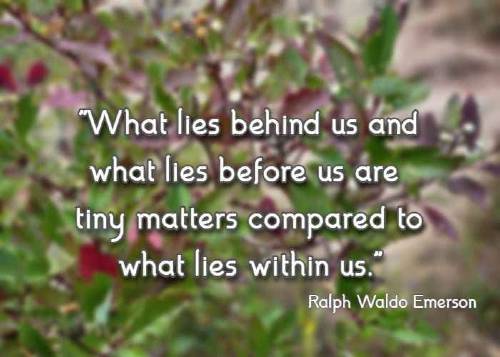
Continue reading poems and quotes that share wisdom, encouragement, and thoughtful reflections on life.
Ralph Waldo Emerson’s poems continue to touch hearts because they remind us of truths that never fade. His words call us to look inward, to stand strong, and to appreciate the simple beauty around us. As you read through these poems, may you find encouragement for your own journey and a gentle reminder that growth begins with a willing spirit. Let Emerson’s insight guide you toward a life filled with purpose, courage, and hope.
More Famous Poets