Popular Poem Categories:
Occasion & Holiday Poems:
Read The Man in the Glass by Peter Dale Wimbrow, also known as The Guy in the Glass, a timeless poem about honesty, character, and integrity.
The Man in the Glass is a poem that speaks straight to the heart. It reminds us that while the world may judge and praise us, the most important voice we answer to is our own. This thought inspires us to pause and reflect on the choices we make each day. When we look in the mirror, we see the real truth about who we are. This poem encourages us to live with honesty, courage, and a steady commitment to doing what is right. It is a simple message, yet it carries the strength to guide us toward a life of meaning and integrity.
Updated August 26, 2026, by Catherine Pulsifer.
When you get what you want in your struggle for pelf,
And the world makes you King for a day,
Then go to the mirror and look at yourself,
And see what that guy has to say.
For it isn’t your Father, or Mother, or Wife,
Who judgment upon you must pass.
The feller whose verdict counts most in your life
Is the guy staring back from the glass.
He’s the feller to please, never mind all the rest!
For he’s with you clear up to the end.
And you’ve passed your most dangerous, difficult test,
If the guy in the glass is your friend.
You may be like Jack Horner and "chisel" a plum,
And think you’re a wonderful guy,
But the man in the glass says you’re only a bum
If you can’t look him straight in the eye.
You can fool the whole world down the pathway of years,
And get pats on the back, as you pass,
But your final reward will be heartaches and tears,
If you’ve cheated the guy in the glass.
This is a great poem,
one which reminds us that when we look into the mirror (whether you are a man or a woman) it is ourselves that we have
to answer to or live with. It's not what others say or think. It is up to us what we do or say. Sometimes in life, we end up listening to others or we
care too much about what others will think. To live a fulfilled life we must
set our own goals, not the goals of others.
The man in the mirror only has himself looking back at him, and he is the one at the end of the day
who has to account for what he has or has not done!
We also must not think too highly of ourselves. When you answer the questions of what your purpose in life is then when you look
in the mirror you know whether or not you are fulfilling or using your gifts the way you should.
Do we allow others to pat us on the back for things we haven't done? We must answer to ourselves.
We know at the end of the day if we did right or if we did wrong. Are we
following our dreams or the dreams of others?
 So when you look in the mirror what do you see?
This poem is often found in graduation poems as a reminder to the new graduate to always be themselves. It is often found in
poems of encouragement as the poem encourages us to be true to ourselves and to follow our dreams.

Peter Dale Wimbrow was born on June 6, 1896, in Whaleyville, Maryland, USA. He died on January 26, 1954. He was a composer and a radio artist. He is also known as a writer, and The Man in The Glass Poem (or The Guy in The Glass Poem) was one of his best pieces of writing and is known all over the world.
If this poem has spoken to you, you may also enjoy these pages:



As you finish reading The Man in the Glass, may its message stay with you. Written by (Peter) Dale Wimbrow in 1934, this timeless poem continues to touch hearts and stir reflection. Whether you've heard it called The Man in the Glass or The Guy in the Glass, its meaning remains powerful and clear.
The poem is a gentle but firm reminder that the person who matters most in your life is the one staring back at you in the mirror. It speaks to the importance of living with honesty, keeping your integrity, and staying true to yourself—no matter what the world may say. Praise and approval from others may come and go, but peace of mind comes only when you know you've done what's right.
Let this poem inspire you to walk your path with courage, guided by your values, and always with a heart that can look itself in the mirror and smile.
More Poems About Life to Encourage and Inspire
The poem emphasizes the importance of self-honesty and integrity. It reminds readers that the most critical judgment comes from within. No matter how others perceive you, if you can’t face yourself in the mirror with pride, external validation is meaningless.
Dale Wimbrow first published the poem in 1934 in The American Magazine. It was later widely circulated, and over the years, it has been used in various motivational and self-help contexts.
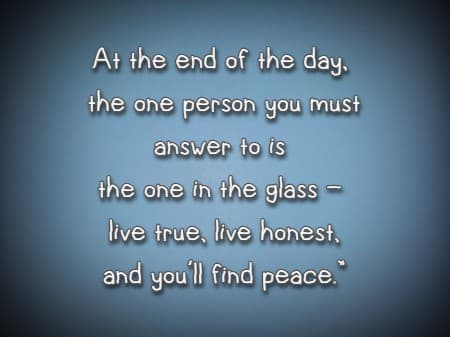
The "glass" in the poem symbolizes a mirror, representing self-reflection and personal accountability. It serves as an inspirational reminder that the person you see in the mirror is the one whose opinion holds the most significance. The image encourages readers to seek validation from within, promoting inner strength and integrity over external approval.
The poem's message resonates with people seeking self-improvement and personal growth. Its focus on self-reflection and living with integrity makes it a powerful tool for individuals aiming to live authentically and responsibly.
The themes of this poem echo ideas found in philosophical works that emphasize self-awareness and personal morality, such as Socrates' notion that
"the unexamined life is not worth living." It also aligns with modern self-help literature focused on inner fulfillment rather than external approval. Another
famous poet, Madeline S. Bridges, has a similar message in her poem "Life is a Mirror".
Life Is The Mirror
There are loyal hearts, there are spirits brave.
There are souls that are pure and true;
Then give to the world the best you have.
And the best shall come back to you.
Give love, and love to your heart will flow,
A strength in your utmost need;
Have faith, and a score of hearts will show
Their faith in your word and deed.
Give truth, and your gifts will be paid in kind,
And song a song will meet;
And the smile which is sweet will surely find
A smile that is just as sweet.
Give pity and sorrow to those who mourn;
You will gather in flowers again
The scattered seeds from your thought outborne,
Though the sowing seemed in vain.
For life is the mirror of king and slave,
'Tis just what you are and do;
Then give to the world the best you have.
And the best will come back to you.