Popular Poem Categories:
Occasion & Holiday Poems:
What age is the happiest? We may answer that question differently depending on where we are in life, but Wilhelmina Stitch offers a simple and encouraging answer in her poem The Happiest Age: the happiest age is the one we are living now.
When we are young, it can be easy to wish the years away. We look forward to finishing school, getting a driver's license, starting a career, or reaching another milestone. Yet when one stage arrives, we often find ourselves looking ahead to the next one.
As the years pass, our perspective can change. Instead of wishing time would move faster, we may wonder where the years have gone. We can find ourselves looking back at earlier seasons of life and wishing we could experience some of those moments again.
Wilhelmina Stitch reminds us that yesterday cannot be brought back and tomorrow is never guaranteed. What we do have is today. Her poem encourages us to appreciate the life before us, notice the beauty around us, continue doing our best, and find happiness in the present rather than waiting for another age or another time.
Perhaps that is the real answer to the question of life's happiest age. Whatever our age may be, there is still something to appreciate, something to give, and something to enjoy today.
Updated September 16, 2026, by Catherine Pulsifer.
What age is happiest? Had you asked me,
I would have made this plea: the Now is best.
What joy to live with zest each newborn day;
and from the Moment wrest what Life will give away.
The Past is but a guest who came and went,
and left this one behest: to be content.
Think how To-day is blest!
We've eyes to see Nature in Beauty drest for you, for me.
What matter that the crest of Youth is past.
Youth lives within the breast with joys that last.
The will to do our best, and hands for giving.
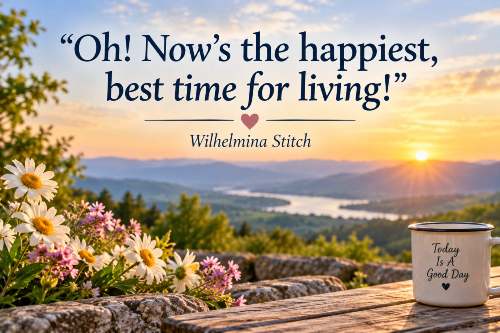
Oh! Now's the happiest, best time for living!
What age is happiest?
Oh! hear my vow, for I have put the test—the happiest's Now.
Sweet sighs and kindly jest for warmth and cheer; and
Love's most high bequest to crown the year.
Wilhelmina Stitch reminds us that happiness does not have to belong to an earlier time or wait for some future season. Whatever our age, today gives us another opportunity to appreciate and enjoy life.
The past can leave us with memories and lessons, but we cannot live there. Contentment grows when we appreciate what we have today instead of continually wishing for another time.
The poet reminds us that the passing of physical youth does not mean we must lose our enthusiasm for living. A willingness to do our best, give to others, and enjoy life's simple pleasures can remain with us at any age.
Beauty, love, laughter, and opportunities to give are not limited to one stage of life. When we notice what is around us, we can discover reasons to be thankful for the age and day we are living now.
Continue reflecting on life, growing older, happiness, and appreciating the years we are given with these poems and quotes.



The Happiest Age offers a simple reminder that we do not have to look backward or forward to find a good time to live. Every season has its changes, but today still holds opportunities for happiness, love, laughter, giving, and appreciation.
May Wilhelmina Stitch's words encourage us to stop wishing the years away or longing for them to return. Whatever our age, may we make the most of the day before us and remember her cheerful message: "Now's the happiest, best time for living!"
More Wilhelmina Stitch Poems to Inspire