Popular Poem Categories:
Occasion & Holiday Poems:
It is easy to tell ourselves that something can wait until tomorrow. A task may seem unimportant today, a decision can be delayed, or we may simply feel there will be plenty of time later. But when tomorrow arrives, we often discover that what we avoided has not disappeared.
In this famous poem, Lillian E. Curtis writes about procrastination and the consequences of continually putting things off. With each delay, tomorrow becomes an excuse for what could and perhaps should be done today.
The poem offers a reminder that time moves forward whether we use it wisely or not. There are responsibilities we can postpone, opportunities we can miss, and decisions that become more difficult when we wait too long.
As you read To-Morrow, consider whether there is something in your own life that you have been meaning to do. Sometimes the best way to stop worrying about tomorrow is simply to begin today.
Updated September 23, 2026, by Catherine Pulsifer.
To-day we will banish all care,
And from our hearts all sorrow,
To-day we will rest and be gay,
And pay for it all to-morrow.
To morrow is to-day's advocate,
And he proves a faithful one,
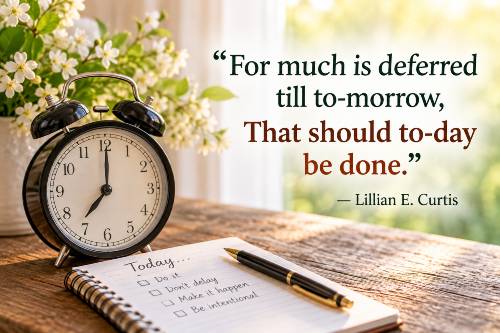
For much is deferred till to-morrow,
That should to-day be done.
Think not of it to-day,
Why useless trouble borrow?
There's time enough to do it in,
We'll think of it to-morrow.
And the advocate still pleads,
And on he lures his victims thus,
Till we find alas "too late,"
That to-morrow has ruined us.
It is easy to promise ourselves that we will take care of something tomorrow. When we repeatedly make that promise, however, important responsibilities can remain unfinished.
Curtis reminds us that delaying what needs to be done does not make it disappear. Taking action today can prevent regret and unnecessary problems later.
Tomorrow eventually becomes today, bringing yesterday's unfinished work with it. Using our time wisely helps keep small responsibilities from becoming larger burdens.
Waiting too long can sometimes mean discovering that the right moment has passed. The poem encourages us to recognize when action is needed rather than assuming there will always be another chance.
We may put something off because it feels difficult or inconvenient. Taking one small step today can be enough to move us away from procrastination and toward progress.
Continue with these poems and pages about decisions, taking action, moving forward, and making the most of the time we are given.



To-Morrow is a simple but pointed reminder of how easily procrastination can become a habit. We may believe there will always be another day to finish the task, make the decision, say the words, or take the first step, but tomorrow is never guaranteed to provide a better opportunity than today.
Lillian E. Curtis encourages us to recognize the danger of continually postponing what needs our attention. We do not have to accomplish everything at once, but we can begin. One decision, one task, or one small step taken today can save us from looking back and wishing we had started sooner.
May this poem encourage you to make good use of the day before you. Rather than waiting for tomorrow to bring the perfect time, do what you can with the time you have today.
More Lillian E. Curtis Poems to Inspire