Popular Poem Categories:
Occasion & Holiday Poems:
Enjoy these grasshopper poems by John Keats and other poets, celebrating the sounds, movement, and wonders of nature.
Have you ever watched a grasshopper jump through the grass? Children often love trying to catch these little creatures, only to discover just how quickly they can leap away. Grasshoppers may be small, but they certainly have a way of catching our attention.
One interesting fact about grasshoppers is that they have hearing organs on their abdomen. These help them detect sounds, including the calls of other grasshoppers. It is just one of the many wonders we can discover when we take time to observe nature.
In these poems, John Keats and other poets remind us that even the smallest creatures have a place in the beauty of our world. From the cheerful sounds of summer to the lessons found in a familiar fable, we hope these verses encourage you to appreciate the simple things around you.
Updated October 10, 2026, by Catherine Pulsifer.
Poet: John Keats
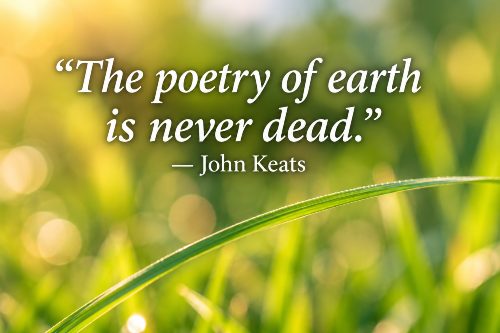
The poetry of earth is never dead:
When all the birds are faint with the hot sun,
And hide in cooling trees, a voice will run
From hedge to hedge about the new-mown mead;
That is the Grasshopper's - he takes the lead
In summer luxury, - he has never done
With his delights; for when tired out with fun
He rests at ease beneath some pleasant weed.
The poetry of earth is ceasing never:
On a lone winter evening, when the frost
Has wrought a silence, from the stove there shrills
The Cricket's song, in warmth increasing ever,
And seems to one in drowsiness half lost,
The Grasshopper's among some grassy hills.
Poet: Anna M. Wiebalk
A grasshopper sang merrily all summer.
When winter came on, it almost perished with hunger.
It went to some ants that lived near by and
Asked them for some food they had put by.
It promised to pay them back within a year.
"What did you do all summer?" asked the ants.
"I sang all the day and all the night," replied the grasshopper.
"Now you can dance," said the ants.
And they would not give the idle grasshopper any food.
Poet: Mary Mapes Dodge
Oh, I'd search the world over
For one four-leaved clover!
Bend low, pretty grass, bend low!
Jump, little crickets ! and tumble, you bees!
Green little grasshoppers, limber your knees;
There's one hidden somewhere, I know.
These shorter verses capture the lively movements and familiar sounds of grasshoppers. Each poet finds something worth noticing in these little creatures.
Poet: Leigh Hunt
Green little vaulter, in the sunny grass,
Catching your heart up at the feel of June,
Sole noise that's heard amidst the lazy noon,
When ev'n the bees lag at the summoning brass.
Poet: Jean Ingelow
Crowds of bees are giddy with clover
Crowds of grasshoppers skip at our feet,
Crowds of larks at their matins hang over,
Thanking the Lord for a life so sweet.
Poet: John Muir
The water in music the oar forsakes.
The air in music the wing forsakes.
All things in move in music and write it.
The mouse, lizard, and grasshopper sing
together on the Turlock sands,
Sing with the morning stars.
Poet: Francis James Child
The tender grasshopper, his chosen crest,
That all the summer, with a tuneful wing.
Makes merry chirpings in its grassy nest,
Inspirited with dew to leap and sing.
Even a small grasshopper can remind us how amazing nature is. When we slow down and look around, we discover beauty in places we might otherwise overlook.
The songs of insects and the warmth of a summer day are simple pleasures. These poems remind us that happiness does not always come from something big or expensive.
The story of the ants and the grasshopper reminds us that enjoying today is important, but so is preparing for tomorrow. Finding a balance between work and play can make life more enjoyable.
John Keats reminds us that nature's music continues throughout the year. Summer may bring the grasshopper's song, while winter offers the cricket's cheerful sound.
Watching grasshoppers jump and listening to insects can fill a child with curiosity. These simple experiences encourage children to ask questions and learn about the world around them.
Discover more poems about birds, trees, gardens, and the wonderful creatures that share our world.




Grasshoppers may be small, but these poems show us how much joy and inspiration they can bring. John Keats reminds us that nature's music never truly stops, while other poets celebrate the lively movements and cheerful sounds of these little creatures.
The next time you see a grasshopper jumping through the grass, take a moment to watch it. Whether you are enjoying the outdoors with children or simply taking a quiet walk, there is always something new to discover. Sometimes the smallest things in nature can bring us the biggest smiles.
More Nature Poems to Inspire and Motivate!