Popular Poem Categories:
Occasion & Holiday Poems:
What are we living for? It is a question many of us consider at different stages of life. Is our purpose found in wealth, position, or recognition, or is there something more important that gives our days meaning?
In this thought-provoking poem, Arthur Franklin Fuller looks at people from different walks of life and finds that money, comfort, and success alone do not necessarily bring contentment. Instead, he points us toward faith, learning, helping others, and living a useful life.
Like many Famous Poems, these verses encourage us to look beyond outward success and consider what will truly matter when we look back on our lives. Fuller's words give us much to reflect upon as we consider our own answer to the question, what are we living for?
Updated October 7, 2026, by Catherine Pulsifer.
"Is life worth living?" the workers ask,
As they go about their irksome task;
Each generation comes and goes,
And sees increase in Problem's woes;
Within the factories, shops and mines,
Are faces seamed by Dearth's sure lines;
These toilers' homes boast comforts few,
In vain their bairns for culture sue:
What are they living for?
Look in upon the wealthy class,
Within their homes or as they pass
On boulevards, 'mid pomp and show,
Where poorer folk can never go;
How hard they seek for some new thrill —
Some way to pass the time until
Tomorrow works its way around —
Relief from boredom is transient found:
What are they living for?
But turn unto the happiest folk —
The middle class — they'll hardly croak!
They have their share of joy and grief,
Success and failure — all are brief;
They earn enough for present needs —
More than enough, but worry breeds;
Yet looking back o'er years and days,
The woe, they say, their weal out- weighs:
What are they living for?
Well — we were given life to learn
Great lessons, and the same to turn
To good account; the privilege ours,
To view and praise Jehovah's powers;
To rise above environment —
In virtue always to augment;
When we shall gain perfection grand,
We'll then be fit to understand:
What are we living for?
Til then, 'tis good for us with might
To hold the Truth — so much of light,
As comes to us from day to day —
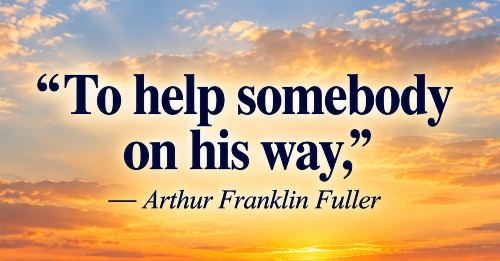
To help somebody on his way,
By precept and example too,
Our humble part with conscience do;
And pilot others from the reef
Of Error; oft we've said with grief,
What are we living for?
Though wealth, position, fame be won.
They're but a sham — when life is done,
The past goes by in swift review.
And gazing, one sees much to rue;
He who is useful — knows the Lord,
Renounces self, and loves His Word,
Who is loved of friends — who shirks no task,
Succeeds in life; and ne'er will ask:
What are we living for?
Fuller looks at people with little and people with plenty and finds that neither circumstance guarantees happiness. What we possess is not necessarily a measure of how meaningful our life has been.
The poet sees life as an opportunity to learn and grow. Our experiences can teach us lessons that shape our character and help us understand what truly matters.
Fuller encourages us to "help somebody on his way" through both our words and our example. A useful life includes noticing others and doing what we can to make their journey a little better.
The poem points toward God as the source of truth and purpose. Faith can guide our choices and help us look beyond temporary success toward values that have lasting importance.
At the end of life, wealth, position, and fame may matter far less than we once thought. Fuller suggests that a successful life is one of faith, usefulness, friendship, and a willingness to do our part.
Read more poems and thoughtful words about life's meaning, the lessons we learn, and what makes a life worthwhile.




What Are We Living For? asks a question that is worth considering throughout our lives. Arthur Franklin Fuller reminds us that wealth, position, and recognition may seem important, but they do not necessarily give us the purpose or contentment we are seeking.
Instead, the poem points us toward faith, learning, helping others, friendship, and being useful. When we look back on our lives, perhaps the most important question will not be how much we had or how well known we became, but whether we used our time well and made a positive difference in the lives of others.
More Arthur Franklin Fuller Poems to Inspire